
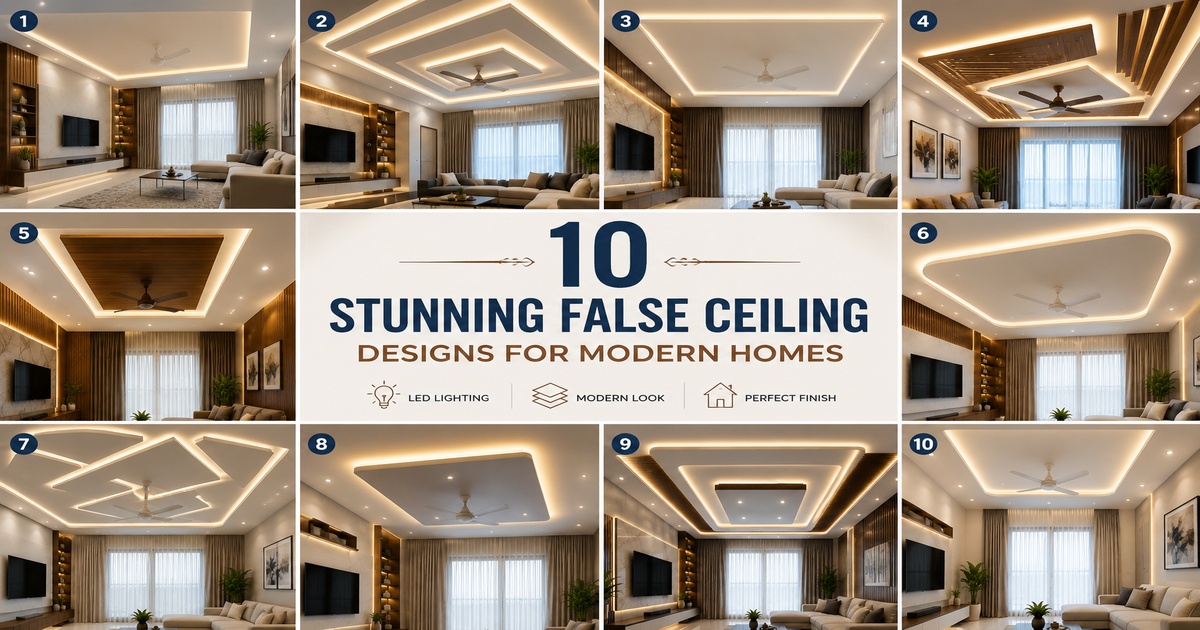

A false ceiling is no longer just a decorative element in modern home interiors. Today, homeowners are choosing false ceiling designs that combine aesthetic appeal, practical lighting, comfort, and functionality. From simple gypsum ceilings to layered designs with LED and cove lighting, there are many options available for different home styles and room sizes.
The latest false ceiling ideas for Indian homes focus on clean designs, warm lighting, minimal detailing, natural finishes, geometric patterns, and smart use of ceiling space. A well-planned ceiling can completely transform the appearance of a living room, bedroom, dining area, or hall while creating a more comfortable and visually balanced interior.
Whether you live in an apartment, independent house, villa, or modern residential property, selecting the right modern false ceiling design can enhance the overall look of your home.
In this blog, let's explore some of the most popular false ceiling designs for Indian homes, their benefits, materials, lighting options, and tips for choosing the right design.
Why Are False Ceilings Popular in Indian Homes?
False ceilings are becoming increasingly popular because they can improve both the appearance and functionality of an interior space. A properly designed ceiling can hide electrical wiring, lighting fixtures, pipes, and other services while creating a clean and finished appearance.
Modern false ceilings can also be used to create different lighting zones within the same room. Recessed lights, LED strips, spotlights, and cove lighting can be integrated into the ceiling according to the requirements of the space.
Some major benefits include:
- Creates a modern and elegant appearance
- Conceals electrical wiring and services
- Allows better placement of lighting
- Helps create different lighting moods
- Adds depth and visual interest to rooms
- Can complement furniture and wall designs
- Supports different interior design styles
- Provides options for customized designs
Latest False Ceiling Ideas for Indian Homes
1. Minimalist False Ceiling Design
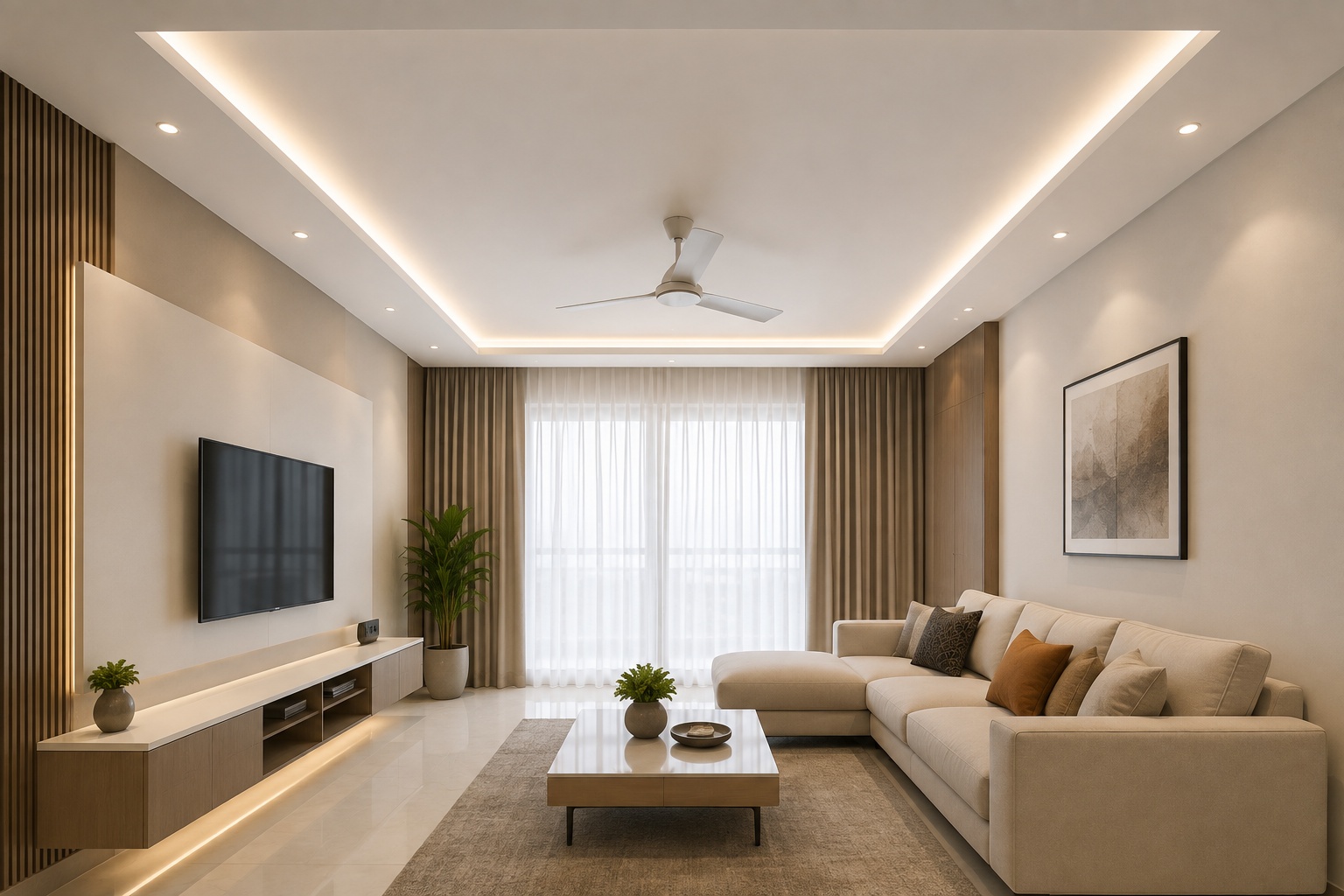
Minimalist false ceilings are an excellent choice for homeowners who prefer a clean and sophisticated interior. These designs usually feature simple lines, subtle borders, recessed lighting, and limited decorative elements.
A minimalist ceiling works particularly well in modern apartments and compact homes because it does not visually overwhelm the room.
You can combine a simple ceiling with recessed LED lights and a small central light fixture to create a balanced appearance. Neutral wall colors, modern furniture, and simple ceiling detailing can further enhance the overall look.
2. Layered False Ceiling with LED Lighting
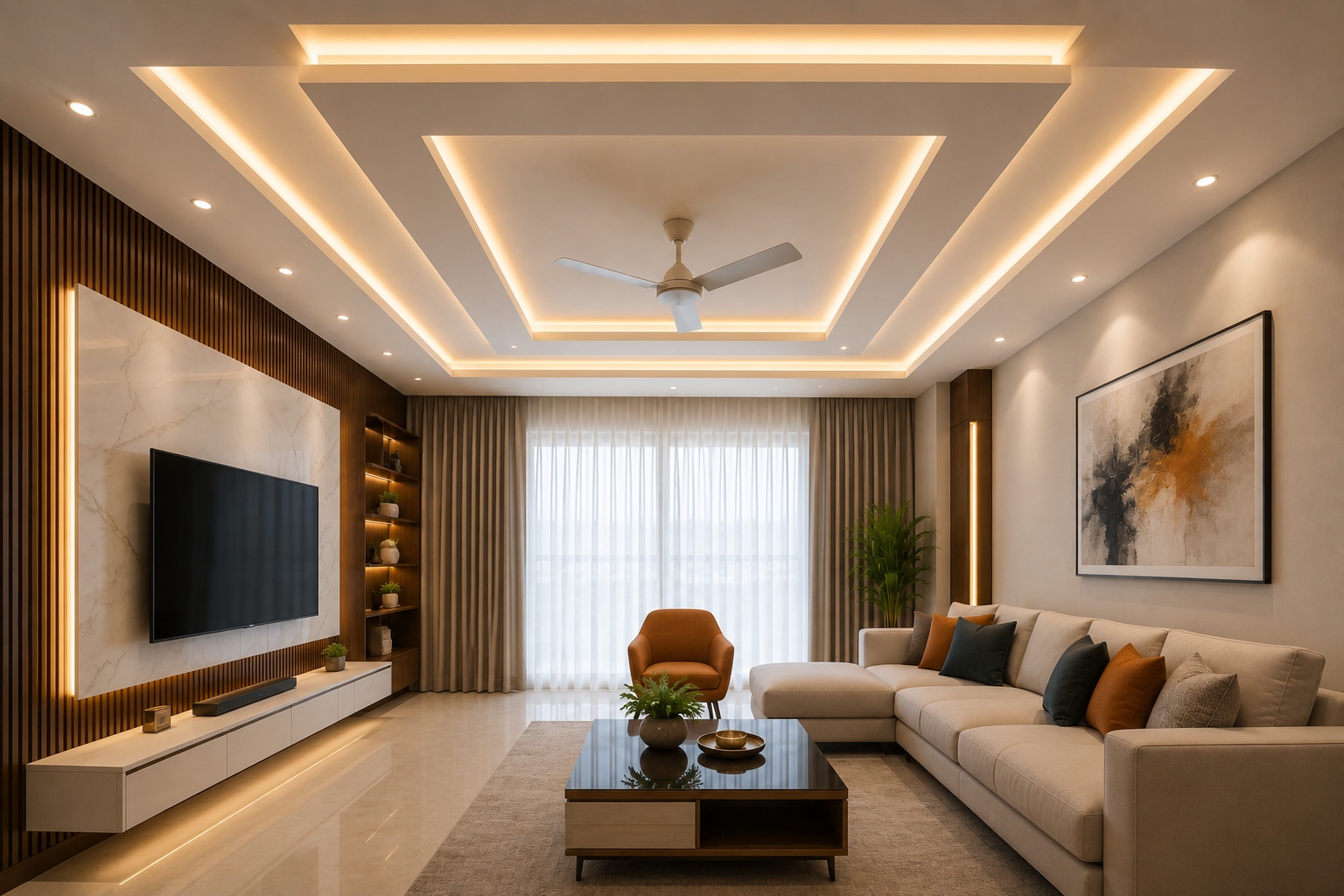
Layered false ceilings add depth and dimension to a room. Multiple levels can be designed to create a visually interesting ceiling while providing space for integrated lighting.
LED strips can be installed within the layers to create a soft glow around the ceiling. Recessed spotlights can then be positioned to provide functional illumination.
This type of false ceiling with LED lights is especially suitable for living rooms, halls, bedrooms, and entertainment areas.
The combination of layered profiles and indirect lighting can create a premium interior appearance without requiring excessive decoration.
3. Gypsum False Ceiling Design
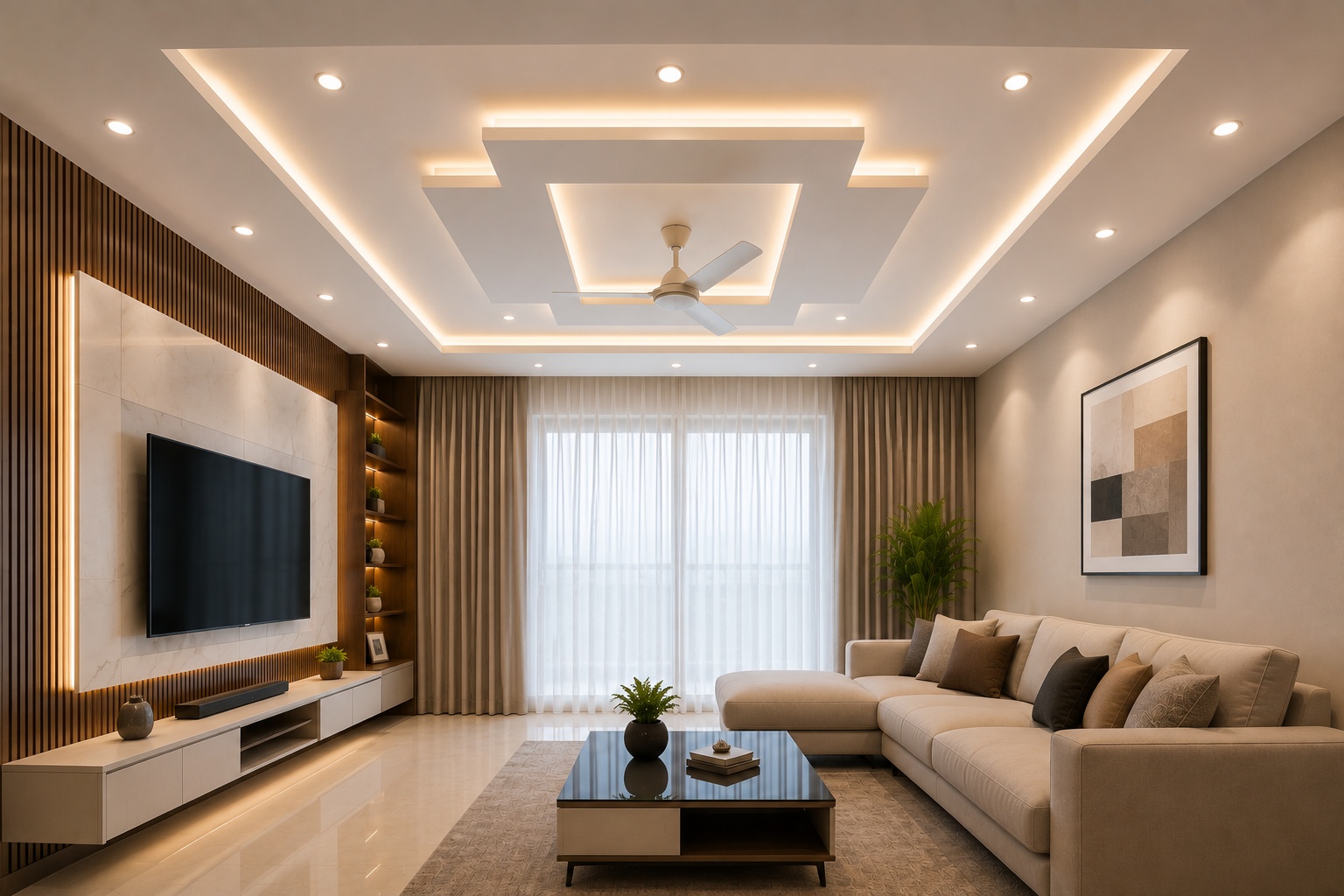
A gypsum false ceiling is one of the popular choices for modern residential interiors. Gypsum boards can be used to create straight lines, curves, geometric patterns, recessed sections, and customized ceiling profiles.
Gypsum ceilings are suitable for homeowners looking for a smooth and contemporary finish. They can also be designed to accommodate recessed lights, LED strips, air-conditioning vents, and other ceiling requirements.
For a modern home, a simple gypsum ceiling combined with warm LED lighting can provide an elegant and comfortable atmosphere.
4. POP False Ceiling Design
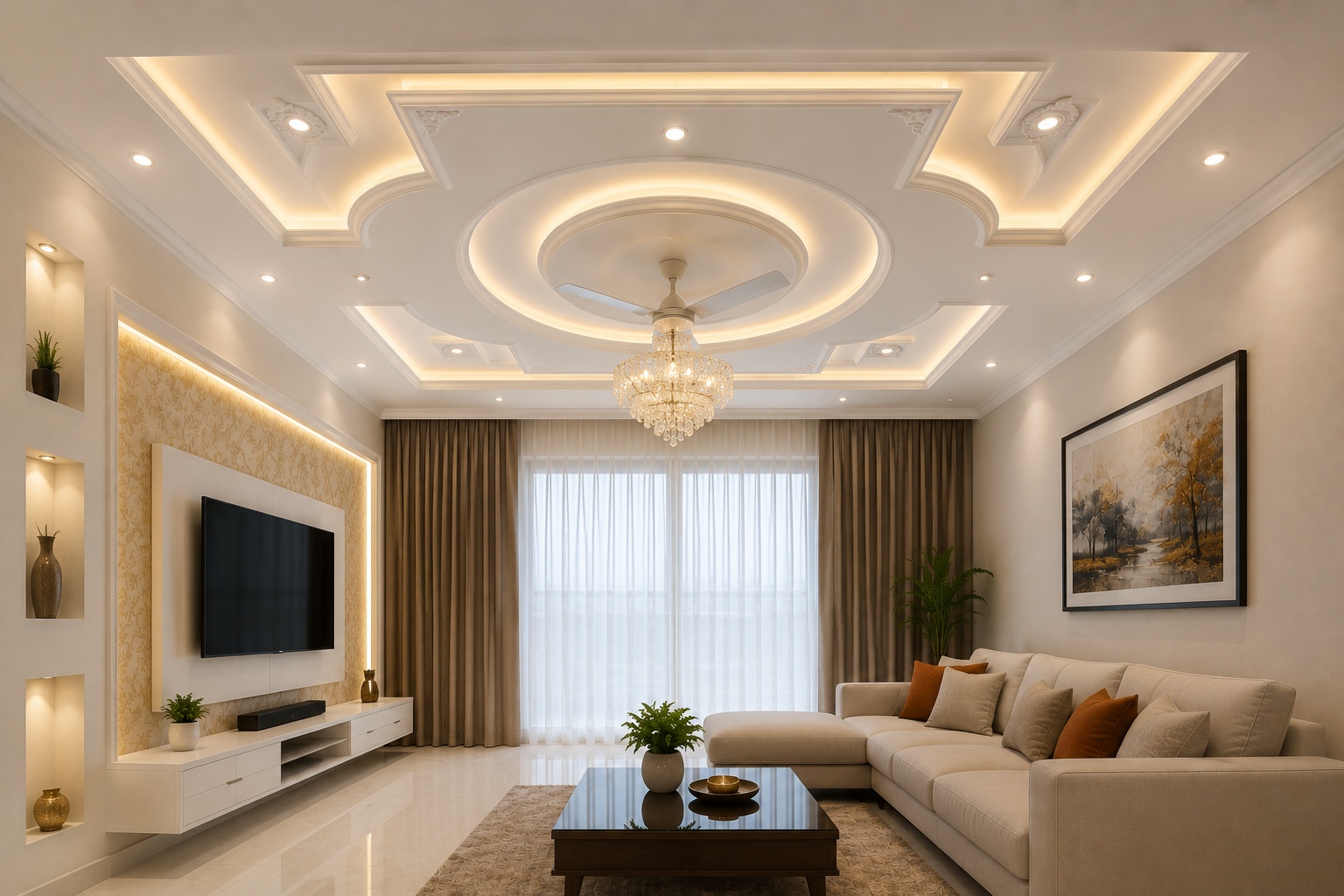
POP, or Plaster of Paris, is another commonly used material for decorative ceiling designs. It can be shaped into different patterns and customized according to the architectural style of the room.
A POP false ceiling design can include decorative borders, curves, mouldings, floral patterns, geometric details, and other customized elements.
POP designs can work well in traditional, contemporary, and luxury interiors. However, the design should be selected carefully so that the ceiling complements rather than overwhelms the rest of the room.
5. Wooden Accent False Ceiling
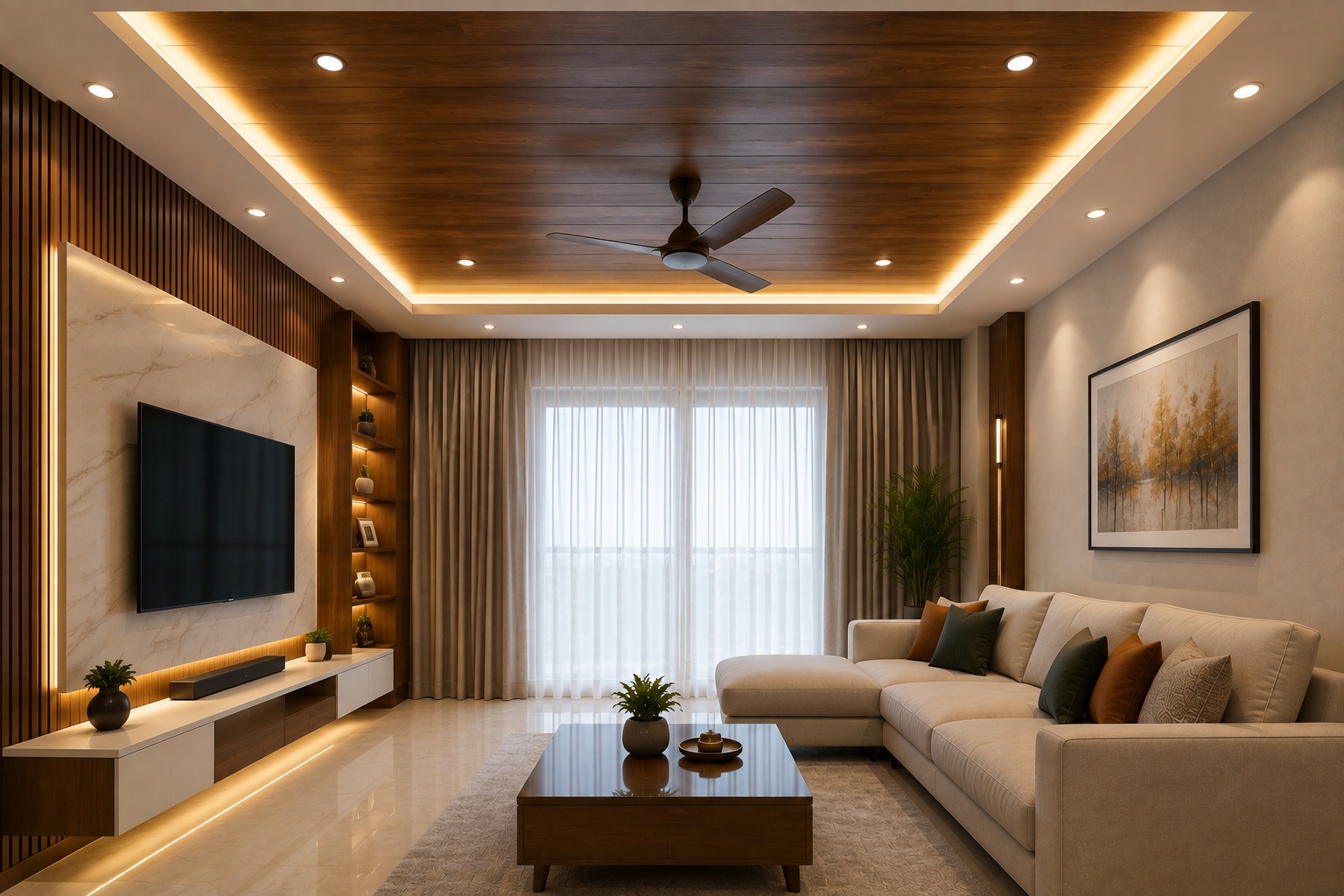
Wooden elements can add warmth and natural character to a modern interior. A wooden accent ceiling can be used across the entire ceiling or combined with gypsum or POP sections.
Wood-finish ceiling panels can work particularly well in living rooms, dining areas, bedrooms, and luxury interiors.
For a balanced appearance, wooden ceiling accents can be combined with warm lighting, neutral walls, and minimal furniture.
6. False Ceiling with Cove Lighting
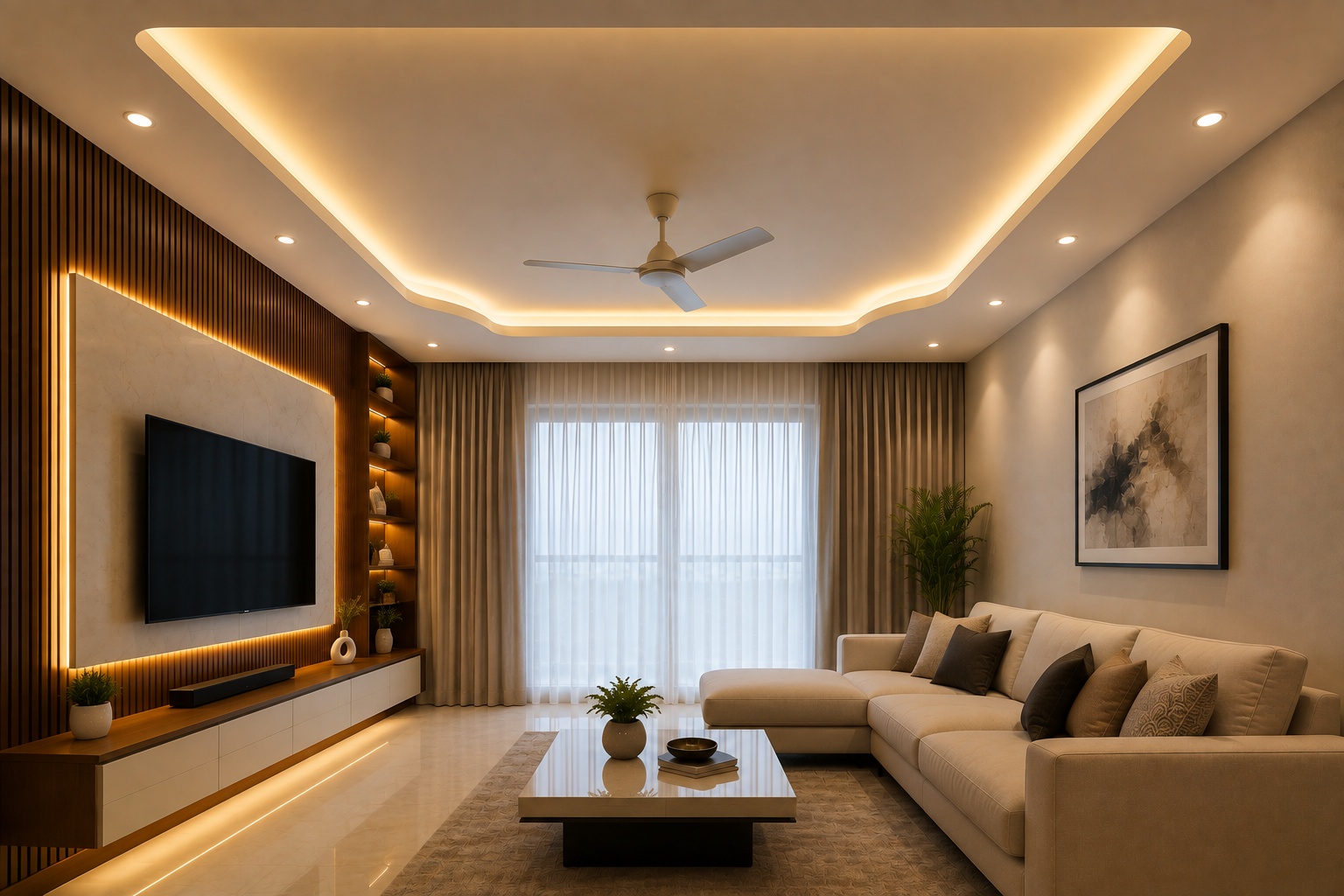
Cove lighting is one of the most popular ways to create soft and indirect illumination. LED strips are placed inside concealed sections of the ceiling so that the light reflects onto the ceiling or wall instead of shining directly into the room.
This creates a warm and relaxing atmosphere.
A false ceiling with cove lighting is especially suitable for:
- Living rooms
- Bedrooms
- Dining areas
- TV units
- Lounge spaces
- Luxury interiors
Warm white lighting can create a comfortable residential atmosphere, while neutral lighting can provide a cleaner and more contemporary appearance.
7. Geometric False Ceiling Design
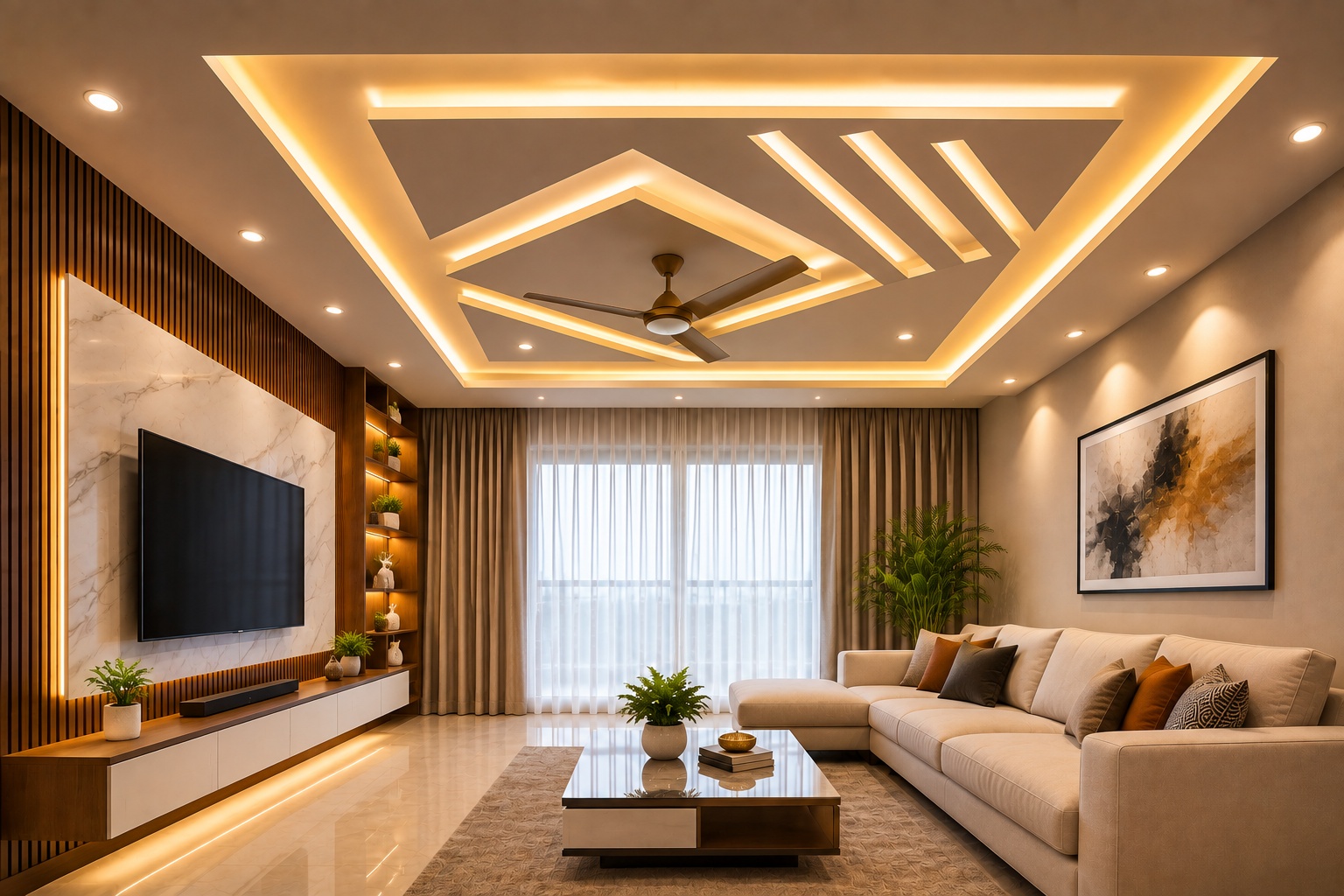
Geometric ceiling designs use shapes such as rectangles, squares, lines, curves, and layered patterns to create an architectural appearance.
A simple geometric pattern can become the main design feature of a room without requiring too many decorative elements.
For example, rectangular ceiling sections with recessed LED lights can complement a modern TV wall or modular furniture. Geometric designs can also be customized according to the dimensions of the room.
8. Floating False Ceiling Design
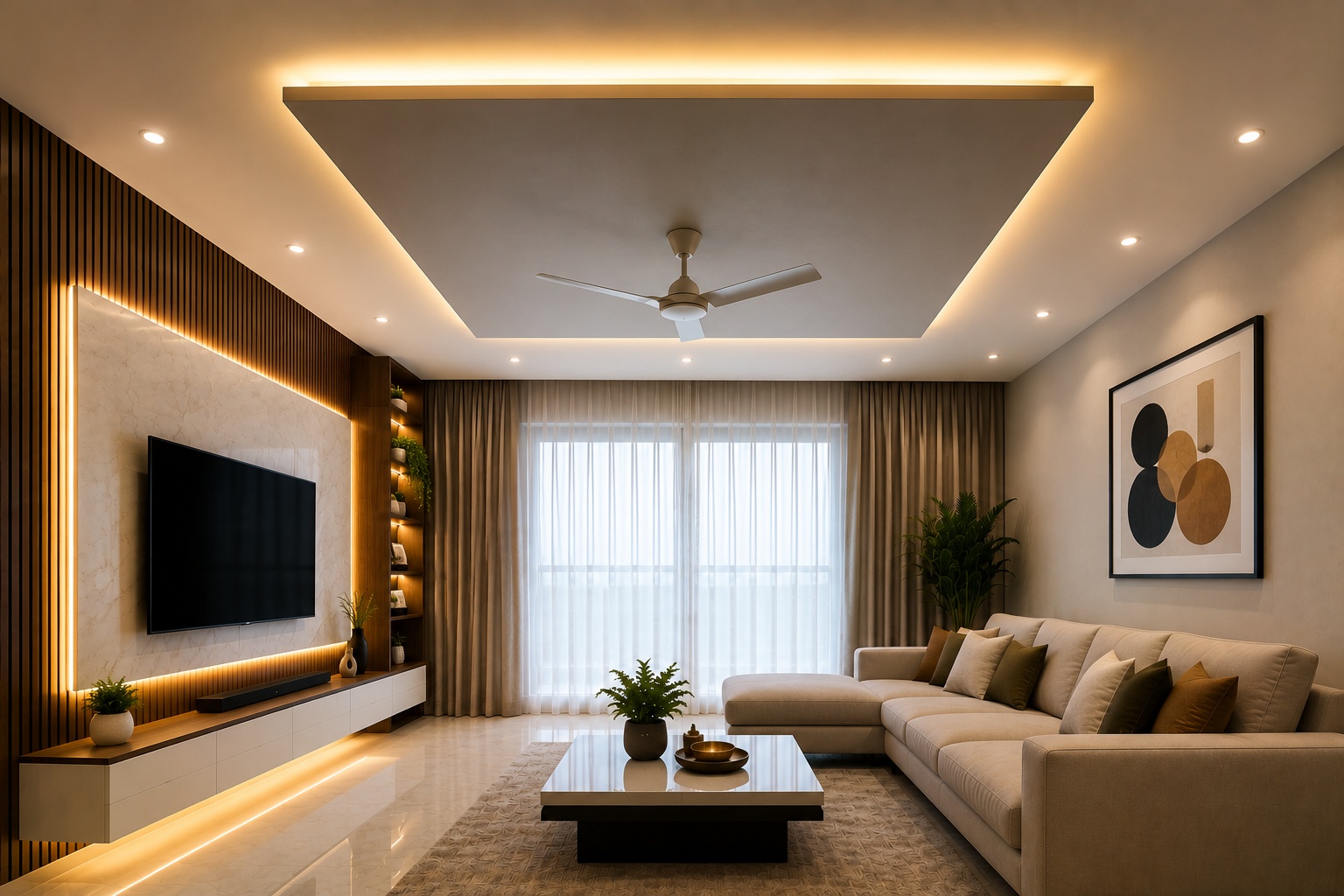
Floating false ceilings are designed to create the visual impression that part of the ceiling is suspended or separated from the main ceiling.
LED strips are often installed around the edges to highlight the floating effect. This creates a lightweight and modern appearance.
A floating ceiling can be particularly effective in living rooms and bedrooms where indirect lighting is desired.
9. Smart False Ceiling with Integrated Lighting
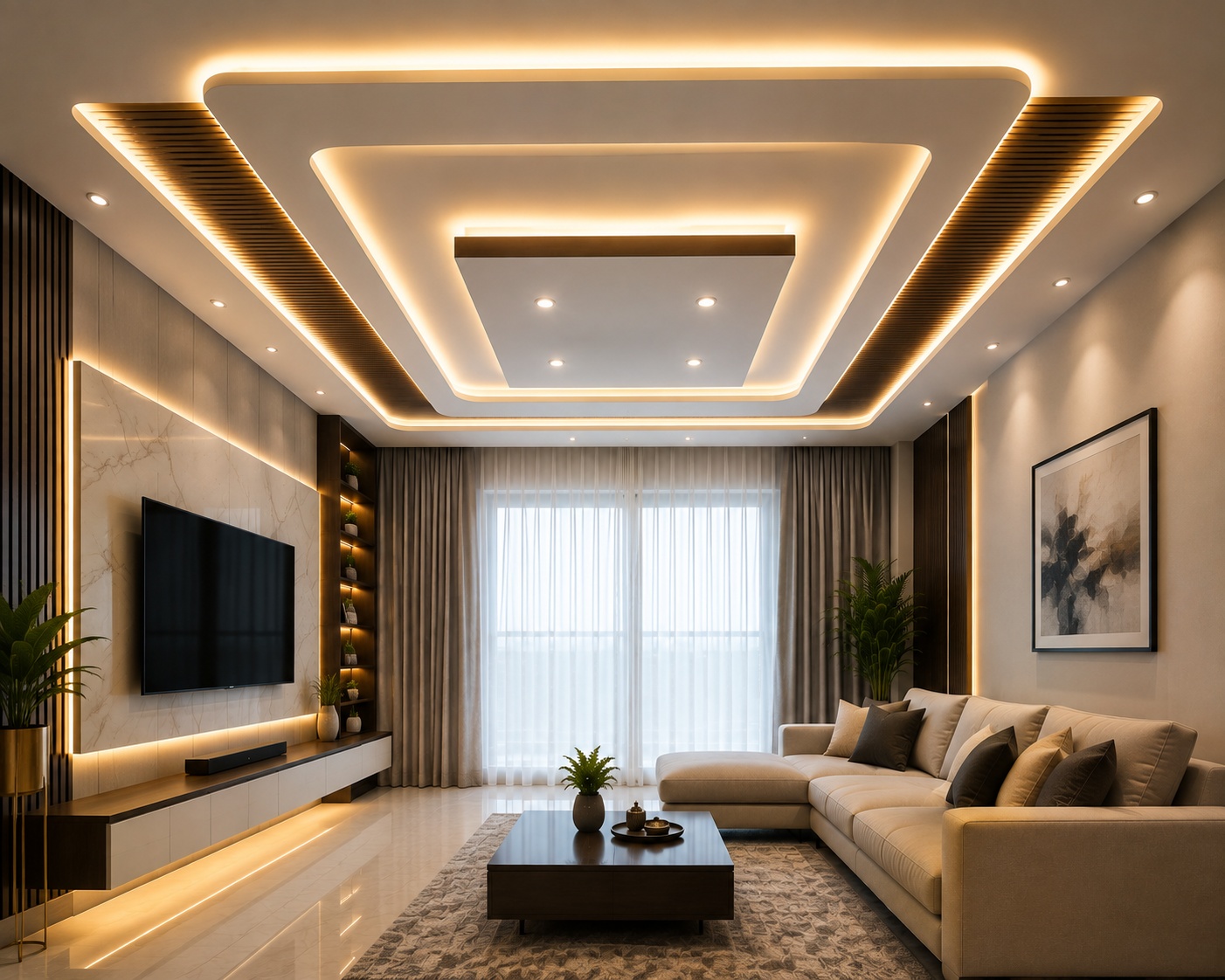
Modern interiors are increasingly incorporating smart lighting solutions. A false ceiling can be planned to accommodate multiple lighting zones, allowing homeowners to control different lights according to their needs.
For example, a living room can have separate controls for:
- Main ceiling lights
- Recessed spotlights
- Cove lighting
- Decorative lights
- TV wall lighting
This allows the same room to have different lighting moods for relaxing, entertaining guests, watching television, or spending time with family.
10. Simple False Ceiling Design for Small Homes
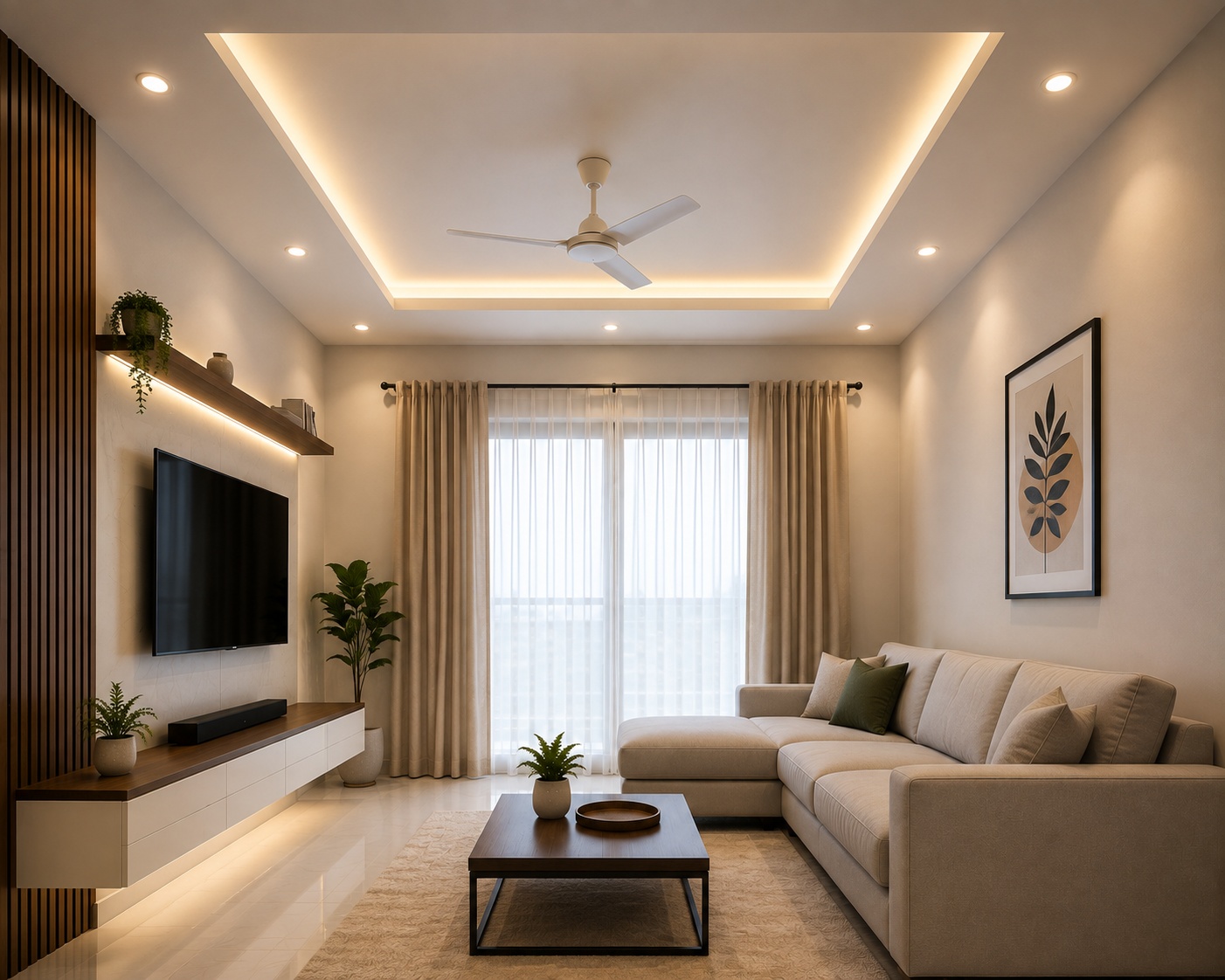
Small homes and apartments do not always require complicated ceiling designs. A simple false ceiling can provide an elegant finish without making the room feel smaller.
For compact rooms, consider:
- Shallow ceiling profiles
- Minimal borders
- Recessed LED lights
- Light colors
- Small cove lighting sections
- Simple geometric patterns
A well-planned simple false ceiling design can make a compact room look neat, modern, and visually organized.
False Ceiling Designs for Different Rooms
Living Room False Ceiling Design
The living room is usually the main area where homeowners want to create an impressive first impression. A layered false ceiling with recessed lights and cove lighting can provide a premium appearance.
The ceiling design should coordinate with the TV unit, sofa, wall panels, curtains, and overall interior theme.
Bedroom False Ceiling Design
For bedrooms, comfort should be the main priority. A bedroom false ceiling with soft cove lighting and warm LED lights can create a relaxing atmosphere.
Avoid excessive lighting or overly complicated patterns. Simple layered designs, wooden accents, and indirect lighting are excellent choices for modern bedrooms.
Dining Room False Ceiling Design
The dining area can benefit from a ceiling design that highlights the dining table. A recessed ceiling section combined with pendant lighting can create a clear focal point.
Wooden accents or warm lighting can add a welcoming atmosphere to the dining space.
Hall False Ceiling Design
For larger halls, layered or geometric designs can be used to create visual depth. The ceiling can be planned along with the overall flooring, wall colors, furniture, and lighting scheme.
A false ceiling design for hall should provide enough lighting while maintaining a balanced appearance.
Kitchen False Ceiling Design
Kitchen ceilings should be planned with practical requirements in mind. Simple gypsum or other suitable ceiling solutions can help conceal wiring and integrate lighting.
Recessed lights can provide focused illumination for countertops and work areas.
Gypsum vs POP False Ceiling
Both gypsum and POP can be used for residential ceiling designs, but their applications can differ.
Gypsum is well suited for modern, clean, and structured ceiling designs. It works particularly well with recessed lighting and simple geometric profiles.
POP provides greater flexibility for certain decorative and customized shapes, making it useful for ornamental ceiling designs.
The right material depends on the design, room requirements, budget, installation conditions, and overall interior concept.
How to Choose the Right False Ceiling Design?
Before finalizing a ceiling design, consider the following factors:
Room Size
Large rooms can accommodate layered or detailed designs, while smaller rooms usually benefit from simple and lightweight ceiling profiles.
Ceiling Height
The available ceiling height should be considered before installing a false ceiling. Excessive drops can make a low-height room feel smaller.
Lighting Requirements
Decide where you need ambient, task, accent, and decorative lighting before finalizing the ceiling layout.
Interior Style
The ceiling should complement your furniture, wall design, flooring, curtains, and other interior elements.
Material
Choose the appropriate ceiling material based on the design requirements, durability, maintenance, and project conditions.
Budget
A professional ceiling plan should balance design expectations with the available budget.
False Ceiling Lighting Ideas
Lighting plays an important role in the final appearance of a false ceiling. Some popular options include:
- Recessed LED lights
- LED strip lights
- Cove lighting
- Spotlights
- Pendant lights
- Decorative ceiling lights
- Track lighting
- Smart lighting systems
Combining different lighting types can create a layered lighting effect and improve the functionality of the room.
Common False Ceiling Mistakes to Avoid
A beautiful ceiling design should also be practical. Avoid these common mistakes:
Overly Complicated Designs
Too many layers and decorative elements can make the room visually crowded.
Poor Lighting Planning
Lighting should be planned before the ceiling installation rather than added later.
Ignoring Ceiling Height
The ceiling drop should be suitable for the room dimensions.
Using Too Many Light Fixtures
Excessive lighting can make a room uncomfortable and visually distracting.
Not Coordinating With Interior Design
The ceiling should complement the overall home interior instead of looking like a separate design element.
Choosing Design Only for Appearance
Maintenance, accessibility, lighting, ventilation, and electrical requirements should also be considered.
Benefits of Modern False Ceiling Designs
A well-planned modern false ceiling design can provide several benefits:
- Enhances interior aesthetics
- Improves lighting integration
- Conceals wiring and services
- Creates a clean finished appearance
- Adds architectural depth
- Supports different interior styles
- Allows customized lighting zones
- Can highlight important areas of a room
- Complements modern furniture and wall designs
Why Professional False Ceiling Planning Matters
False ceiling installation requires more than selecting an attractive design. The ceiling should be planned according to the room dimensions, electrical requirements, lighting positions, ceiling height, ventilation, furniture arrangement, and overall interior theme.
Professional interior designers can create a ceiling layout that works together with the rest of the home. This helps ensure that the final result is functional, aesthetically balanced, and suitable for everyday use.
At Sree Sendhur Decors, false ceiling solutions can be customized according to the design requirements of modern homes. From simple ceilings to layered designs with integrated lighting, the ceiling can be coordinated with the overall interior concept.
Conclusion
The right ceiling can completely change the character of a home. From minimalist gypsum ceilings and elegant POP designs to wooden accents, geometric profiles, floating ceilings, and LED-integrated solutions, there are many options for creating a modern interior.
The latest false ceiling ideas for Indian homes focus on combining style with functionality. Instead of choosing a design only because it looks attractive, homeowners should consider room size, ceiling height, lighting requirements, material, maintenance, budget, and the overall interior theme.
Whether you are planning a new home or renovating an existing space, a professionally designed false ceiling can create a polished and comfortable environment.
For modern homes, the best approach is to choose a false ceiling design that complements your lifestyle, lighting needs, furniture, and complete home interior design.
Frequently Asked Questions
1. What is the best false ceiling design for Indian homes?
The best design depends on the room size, ceiling height, interior style, lighting requirements, and budget. Minimalist gypsum, layered LED ceilings, cove lighting, and simple geometric designs are popular options for modern homes.
2. Which is better, gypsum or POP false ceiling?
Both materials have their advantages. Gypsum is commonly suitable for clean and modern designs, while POP offers flexibility for decorative and customized patterns. The right choice depends on the project requirements.
3. What are the latest false ceiling trends for 2026?
Popular trends include minimalist profiles, layered ceilings, recessed LED lighting, cove lighting, natural wood accents, geometric designs, floating ceilings, and smart lighting integration.
4. Which false ceiling is best for a small living room?
A simple gypsum false ceiling with recessed LED lights or subtle cove lighting is a practical choice for a small living room. Avoid excessive layers that may reduce the visual sense of space.
5. Can LED lights be installed in a false ceiling?
Yes. False ceilings can be designed to accommodate recessed LED lights, LED strips, spotlights, and cove lighting according to the room's lighting requirements.
6. Is false ceiling suitable for bedrooms?
Yes. False ceilings can enhance bedroom interiors when designed with comfortable lighting and simple detailing. Warm LED and cove lighting can create a relaxing atmosphere.
7. How do I choose the right false ceiling design?
Consider room size, ceiling height, lighting requirements, interior style, material, maintenance, and budget. The design should complement the complete home interior.
8. Are false ceilings suitable for low-height rooms?
Yes, but the design should have a minimal ceiling drop. Simple profiles and carefully positioned lighting can help maintain the visual openness of a low-height room.