
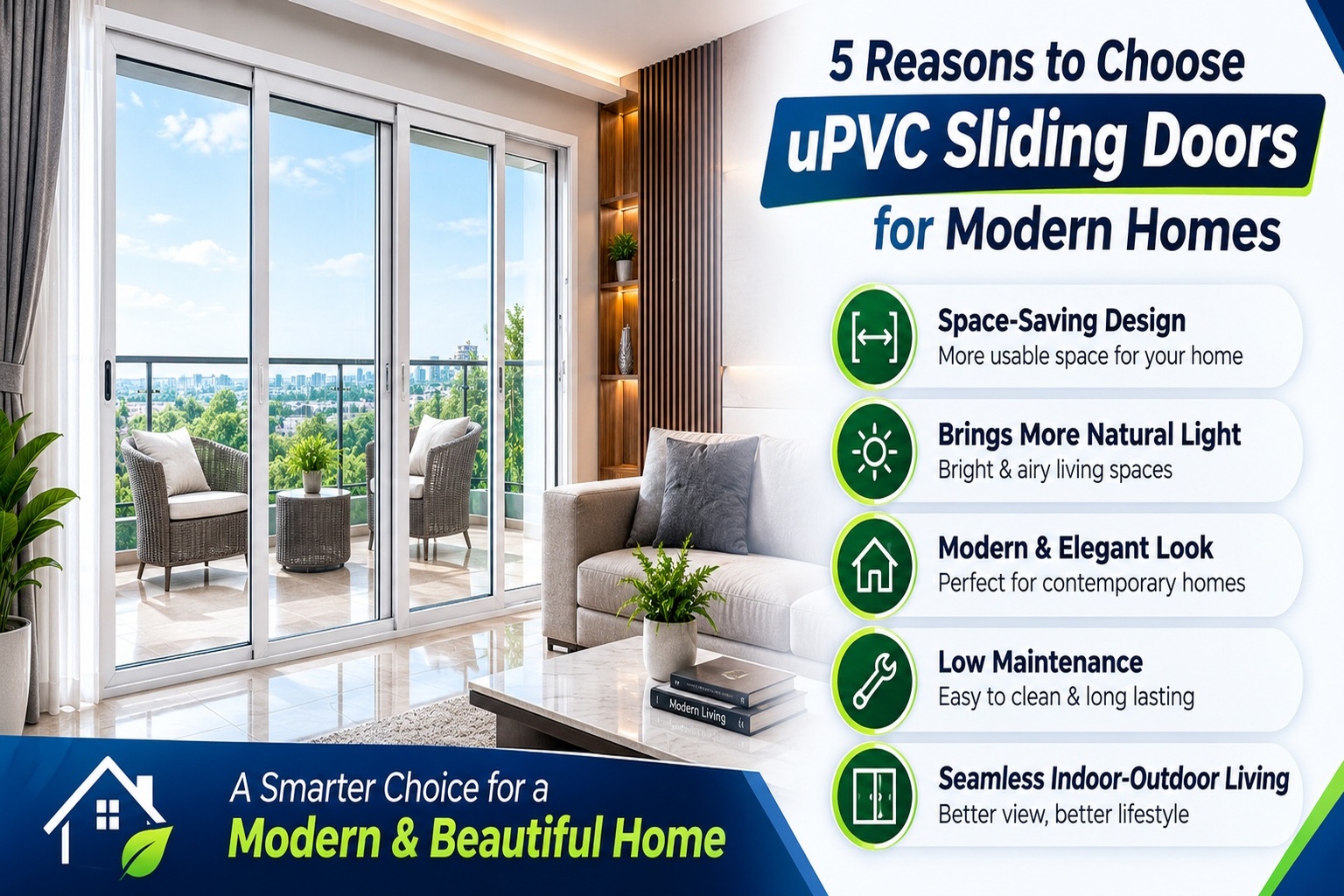

Modern homes are increasingly designed around natural light, open spaces, better ventilation, and seamless connections between indoor and outdoor areas. One of the easiest ways to support these requirements is by choosing the right door system.
Among the different options available today, uPVC sliding doors for modern homes have become a popular choice for balconies, patios, living rooms, terraces, and other suitable openings. Their clean appearance, smooth sliding operation, low-maintenance characteristics, and ability to accommodate large glazed areas make them a practical option for contemporary residential spaces.
A well-designed sliding door can do more than simply provide an entrance or exit. It can visually connect a living room with a balcony, bring more daylight into a space, improve access, and create a modern architectural appearance.
In this blog, we explore 5 important reasons to choose uPVC sliding doors for modern homes, along with their benefits, applications, maintenance requirements, and tips for selecting the right system.
What Are uPVC Sliding Doors?
uPVC stands for unplasticized polyvinyl chloride, a rigid material commonly used for modern door and window systems.
A uPVC sliding door consists of panels that move horizontally along a track rather than opening into the room like a conventional hinged door.
Depending on the selected system, uPVC sliding doors can be configured with different panel arrangements, glazing options, hardware, colours, and finishes.
They are commonly considered for:
- Balconies
- Patios
- Living rooms
- Terraces
- Garden access
- Large exterior openings
- Modern residential spaces
The exact performance of any sliding door depends on the complete system, including the profile, reinforcement, glazing, hardware, seals, fabrication, installation, and maintenance.
5 Reasons to Choose uPVC Sliding Doors for Modern Homes
1. Space-Saving Sliding Operation
One of the biggest advantages of a uPVC sliding door is the way it opens.
Unlike hinged doors, sliding panels move horizontally along a track. This means the door does not require a large swing area inside or outside the room.
This can be particularly useful in apartments and compact homes where every square foot of usable floor space matters.
For example, if a sofa, dining table, cabinet, or other furniture is located near a balcony opening, a hinged door may require additional clearance. A sliding door can help maintain a more practical arrangement.
Why space-saving operation matters
- Saves floor space
- Provides easier furniture planning
- Works well with compact layouts
- Creates a wider visual opening
- Suitable for balconies and patios
- Supports modern open-plan interiors
For homeowners looking to maximize available space, sliding doors can be a practical alternative to traditional swing doors.
2. Brings More Natural Light Into Your Home
Natural light can make an interior feel brighter, more spacious, and more welcoming.
Many uPVC sliding door designs incorporate large glass areas, allowing daylight to enter the room while maintaining a connection with the outside.
A large glazed sliding door can be particularly effective in:
- Living rooms
- Balcony areas
- Dining spaces
- Family rooms
- Patio-facing rooms
- Garden-facing interiors
During the day, natural daylight can reduce the need for artificial lighting in suitable spaces.
The visual connection created by glass can also make a room feel more open.
Create a Brighter Interior
A sliding door facing a balcony, garden, or open outdoor area can become an important architectural feature.
Instead of treating the balcony as a completely separate space, the door can visually connect it with the living room.
This creates a more continuous and spacious feeling.
3. Modern Design and Elegant Appearance
The appearance of a door can significantly influence the overall design of a home.
Modern uPVC sliding doors generally feature clean profiles and large glazed sections that complement contemporary architecture.
They can work particularly well with:
- Minimalist interiors
- Modern villas
- Contemporary apartments
- Luxury residential spaces
- Neutral colour palettes
- Modern furniture
- Large window openings
Depending on the system and manufacturer, uPVC profiles may be available in different colours, textures, and finishes.
Homeowners can choose a design that complements the flooring, wall colours, furniture, windows, and other interior elements.
Minimalist Design Advantage
Modern interior design often focuses on simplicity rather than excessive decoration.
A large glazed sliding door can provide a clean architectural appearance without adding unnecessary visual elements.
This makes uPVC sliding doors for modern homes a suitable choice for homeowners who prefer a contemporary aesthetic.
4. Low-Maintenance and Easy to Clean
Maintenance is an important consideration when selecting doors for everyday use.
uPVC is generally known for its relatively low-maintenance characteristics compared with materials that require regular painting or polishing.
Routine maintenance for a sliding door can include:
- Cleaning the frame
- Cleaning the glass
- Removing dust from tracks
- Checking rollers
- Inspecting seals
- Checking locking hardware
- Keeping drainage paths clear where applicable
The exact maintenance requirements depend on the system and installation conditions.
Easy Everyday Cleaning
For most households, regular cleaning can help maintain the appearance and operation of the door.
Glass can be cleaned using suitable glass-cleaning products, while uPVC frames can generally be wiped with a soft cloth and appropriate mild cleaning solution.
The tracks should also be kept free from dust and debris to support smooth operation.
5. Suitable for Modern Indoor-Outdoor Living
Modern homes increasingly focus on creating stronger connections between indoor and outdoor areas.
A uPVC sliding balcony door can help create this connection by providing a large opening between a living space and balcony.
Similarly, sliding doors can be considered for patios, gardens, terraces, and other suitable exterior areas.
When the doors are closed, they can provide a physical separation between the spaces. When opened, they can create a wider passage.
This flexibility makes sliding doors useful for:
- Family gatherings
- Entertaining guests
- Balcony access
- Garden access
- Outdoor dining
- Relaxing spaces
For homes designed around natural light and outdoor views, large sliding doors can become an important part of the overall architecture.
Additional Benefits of uPVC Sliding Doors
The five main reasons above make uPVC sliding doors attractive, but there are several other factors worth considering.
Moisture Resistance
uPVC itself is resistant to moisture and does not rust like metal.
This can make suitable uPVC systems useful for areas where humidity or exposure to rain is a consideration.
However, overall weather performance depends on the complete door system and installation.
Termite-Free Frame Material
Because uPVC is not a timber material, the uPVC frame itself is not a food source for termites.
This can be a practical advantage for homeowners who want to reduce concerns associated with termite damage to timber frames.
Better Visual Connection
Large glazed panels can provide clearer views of balconies, gardens, terraces, and outdoor areas.
This can make interiors feel more connected to the surroundings.
Flexible Configuration
Depending on the selected system, sliding doors can be designed with different panel arrangements.
The appropriate configuration depends on:
- Opening width
- Number of panels
- Access requirements
- Structural conditions
- Glass specification
- Hardware
- Desired operation
Professional measurement is important before selecting the final configuration.
Where Can You Use uPVC Sliding Doors?
uPVC Sliding Doors for Balconies
Balcony doors are one of the most common applications for sliding systems.
A glazed sliding door can allow natural light into the living room while providing access to the balcony.
It also avoids the swing area required by a hinged balcony door.
uPVC Sliding Patio Doors
For homes with patios or garden areas, sliding doors can provide convenient access between indoor and outdoor spaces.
Large glazed panels can also improve visibility and daylight.
Living Room Sliding Doors
A sliding door can become an architectural feature in the living room.
It can be coordinated with:
- TV units
- Sofas
- Curtains
- Flooring
- False ceilings
- Wall panels
- Interior lighting
Dining Area Sliding Doors
A dining area facing a balcony, garden, or outdoor space can benefit from a large glazed opening.
Natural light and outdoor views can create a more comfortable dining environment.
uPVC Sliding Doors vs Hinged Doors
Both door types have their advantages.
| Feature | uPVC Sliding Doors | Hinged Doors |
|---|---|---|
| Opening Style | Horizontal sliding | Swing opening |
| Floor Space | Space-saving | Requires swing clearance |
| Large Glass Areas | Suitable for many systems | Also possible |
| Modern Appearance | Excellent | Excellent |
| Balcony Use | Very suitable | Suitable |
| Furniture Planning | Easier near opening | Requires clearance |
| Outdoor Connection | Excellent | Good |
| Maintenance | System-dependent | System-dependent |
The right option depends on the room layout, opening size, usage requirements, and preferred design.
How to Choose the Right uPVC Sliding Door?
Choosing the right sliding door involves more than selecting a colour or style.
1. Check the Opening Size
Measure the width and height accurately before selecting the system.
Large openings may require appropriate reinforcement and system specifications.
2. Select Suitable Glazing
Glass is an important part of a sliding door.
Depending on the application, homeowners may consider factors such as:
- Safety
- Thermal performance
- Acoustic performance
- Solar control
- Privacy
- Appearance
The correct glass specification should be selected based on the property's requirements.
3. Check Hardware Quality
Rollers, locks, handles, tracks, and other hardware influence the everyday operation of a sliding door.
Quality hardware can contribute to smoother operation and long-term usability.
4. Consider Sealing
Proper seals help support weather resistance and reduce air and water infiltration where the system is designed for those requirements.
5. Choose the Right Finish
Select a finish that complements the home's windows, walls, flooring, and interior style.
Maintenance Tips for uPVC Sliding Doors
Proper maintenance can help preserve the appearance and operation of your sliding doors.
Clean the Tracks Regularly
Dust and debris can accumulate inside tracks. Regular cleaning can help maintain smoother movement.
Clean the Glass
Keep glass surfaces clean to maintain natural light and outdoor visibility.
Check the Rollers
If the door becomes difficult to slide, the rollers and track should be inspected.
Check the Seals
Inspect seals periodically for signs of wear or damage.
Avoid Excessive Force
Sliding doors should move smoothly. Avoid forcing a panel if it becomes difficult to operate.
Check Locks and Handles
Inspect hardware regularly to ensure that locks and handles operate properly.
For major repairs or hardware replacement, professional service is recommended.
Common Mistakes to Avoid
When choosing uPVC sliding doors, avoid these common mistakes:
Choosing Only Based on Price
The cheapest option may not provide the best long-term value.
Compare the complete system, glazing, hardware, reinforcement, installation, and warranty.
Ignoring Installation
Even a good door system can perform poorly if it is incorrectly installed.
Choosing the Wrong Glass
Glass should be selected according to the location and performance requirements.
Ignoring Track Maintenance
Dirty tracks can affect smooth operation.
Not Considering Furniture Placement
Before finalizing the door position, plan the interior furniture layout.
Why Professional Installation Matters
Professional installation plays an important role in the performance of any sliding door.
Accurate measurements, frame alignment, glazing installation, hardware adjustment, sealing, drainage, and track positioning should all be handled carefully.
A professional team can also help identify the right door configuration based on the opening and intended use.
At Sree Sendhur Decors, uPVC door solutions can be planned according to the home's architecture, interior style, opening dimensions, and functional requirements.
Why Choose Sree Sendhur Decors?
At Sree Sendhur Decors, we focus on creating practical and stylish solutions for modern homes.
Our uPVC door solutions can be customized according to individual requirements, including:
- uPVC sliding doors
- uPVC balcony doors
- uPVC windows
- Modern door designs
- Glazed sliding systems
- Customized door solutions
From measurement and design selection to fabrication and installation, professional planning helps ensure that the final door system fits naturally into the home.
The goal is to provide a combination of modern design, practical functionality, quality materials, and professional installation.
Conclusion
Choosing the right door can have a significant impact on the comfort, appearance, and functionality of your home.
uPVC sliding doors for modern homes offer several practical benefits, including space-saving operation, large glass areas, modern appearance, relatively low maintenance, and a strong connection between indoor and outdoor spaces.
They can be particularly useful for balconies, patios, living rooms, dining areas, and other suitable openings.
However, the quality of the complete system matters. Profile design, glazing, hardware, reinforcement, seals, fabrication, installation, and maintenance all contribute to the final performance.
Before making a decision, compare your available space, lifestyle requirements, design preferences, budget, and long-term expectations.
With the right planning and professional installation, a uPVC sliding door can become both a functional feature and an attractive part of a modern home.
Frequently Asked Questions
1. Are uPVC sliding doors good for modern homes?
Yes. Their clean appearance, space-saving operation, glazing options, and low-maintenance characteristics make them suitable for many modern residential applications.
2. Are uPVC sliding doors suitable for balconies?
Yes. uPVC sliding balcony doors are commonly considered for residential balconies because they provide convenient access while saving floor space.
3. Do uPVC sliding doors require regular maintenance?
They generally require routine cleaning and periodic checking of tracks, rollers, seals, handles, and locking mechanisms.
4. Are uPVC sliding doors waterproof?
uPVC itself is moisture resistant, but the weather performance of an installed door depends on the complete system, including seals, drainage, fabrication, glazing, and installation.
5. Are uPVC sliding doors termite resistant?
The uPVC frame itself is not a timber material and therefore is not a food source for termites.
6. Can uPVC sliding doors have large glass panels?
Yes. Many sliding systems are designed to accommodate substantial glazed areas, subject to the system specifications and structural requirements.
7. Are uPVC sliding doors better than wooden sliding doors?
There is no universal answer. uPVC can be attractive for low maintenance and modern applications, while wood offers natural character and different design possibilities.
8. How do I maintain uPVC sliding door tracks?
Keep the tracks free from dust and debris, clean them regularly, and have rollers inspected if the door becomes difficult to operate.
9. Can uPVC sliding doors improve natural light?
Large glazed panels can allow more daylight into suitable rooms compared with smaller solid door openings.
10. How long do uPVC sliding doors last?
Service life depends on product quality, system specification, installation, exposure, usage, and maintenance. Choosing a quality system and professional installation is important for long-term performance.