
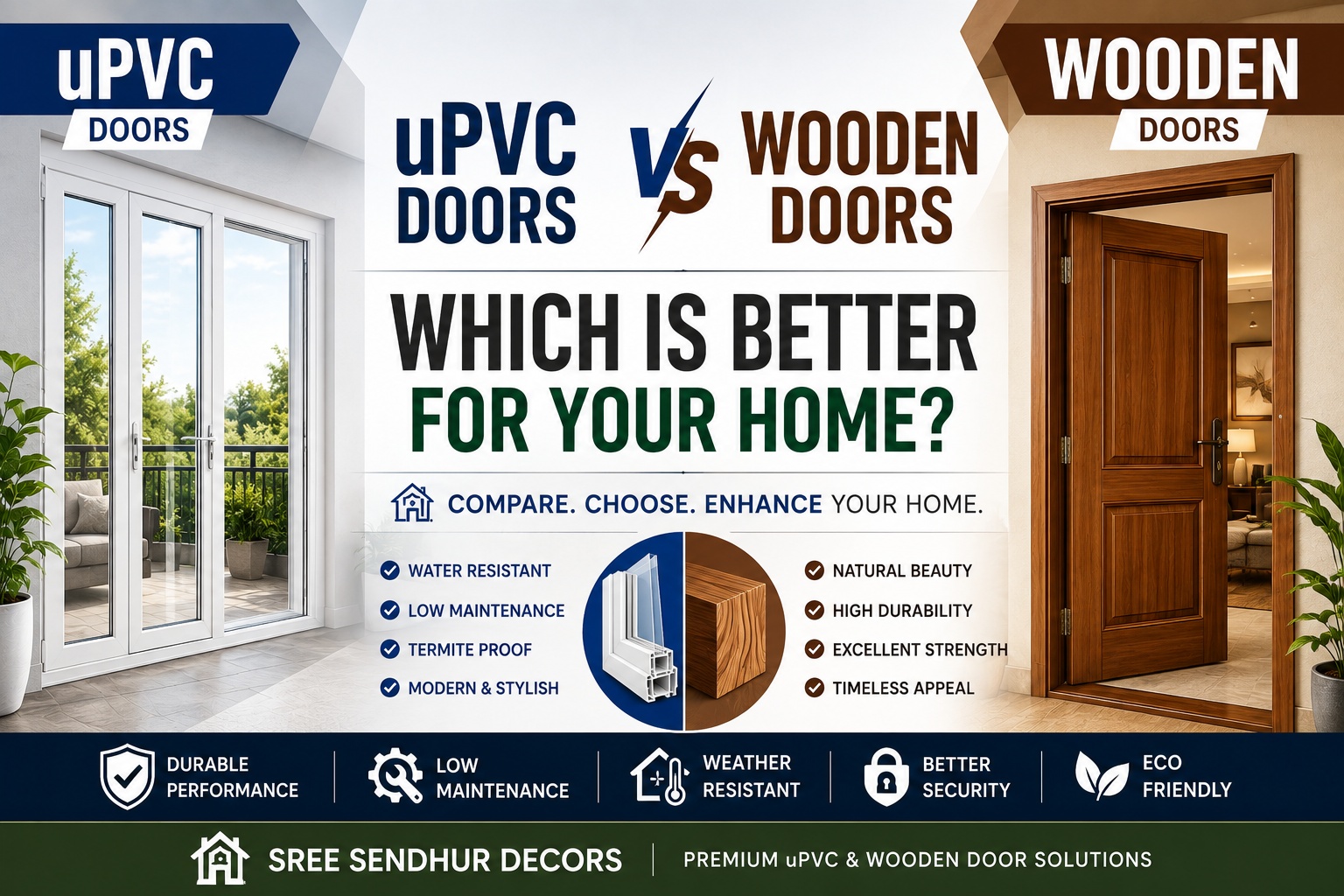

Choosing the right doors for your home is an important decision because doors influence security, appearance, comfort, maintenance, and the overall style of your interiors. Among the many options available today, uPVC doors and wooden doors are two popular choices for residential properties.
Wooden doors have long been valued for their natural appearance and traditional charm. On the other hand, uPVC doors have become increasingly popular in modern homes because of their low-maintenance construction, resistance to moisture, and suitability for contemporary designs.
So, when comparing uPVC doors vs wooden doors, which is better for your home?
There is no single answer for every property. The right choice depends on where the door will be installed, your preferred design, maintenance expectations, climate exposure, budget, and long-term requirements.
This detailed guide compares uPVC doors and wooden doors across important factors to help you make a more informed decision for your home.
What Are uPVC Doors?
uPVC stands for unplasticized polyvinyl chloride. It is a rigid material commonly used for modern door and window frames.
Unlike conventional timber doors, uPVC systems are designed to require relatively little routine maintenance. They are commonly available in different configurations, including sliding and hinged systems, depending on the manufacturer and installation requirements.
Modern uPVC door designs can be used for balconies, patios, utility areas, entrances, and other suitable residential spaces.
Their clean profiles also make them a natural fit for contemporary architecture.
What Are Wooden Doors?
Wooden doors are manufactured using natural timber or engineered wood products depending on the type of door and budget.
They remain a popular choice because of their warm, premium, and timeless appearance.
Wood can also be carved, polished, stained, painted, or customized to complement traditional as well as modern interiors.
Wooden doors are particularly popular for main entrances, bedrooms, pooja rooms, and interior spaces where the appearance of natural wood forms an important part of the design.
uPVC Doors vs Wooden Doors: Detailed Comparison
When deciding between the two materials, it is useful to compare them according to practical everyday requirements.
1. Durability
Durability is one of the first considerations when choosing a door.
uPVC Doors
Quality uPVC door systems are resistant to common issues such as moisture-related corrosion and do not rust like metal. Because the frame itself is not timber, it also does not require the same type of polishing or painting associated with traditional wooden frames.
This makes uPVC particularly useful in locations where doors may experience regular exposure to changing weather conditions.
Wooden Doors
Good-quality wooden doors can provide excellent service when properly manufactured, installed, finished, and maintained.
However, natural wood reacts to environmental conditions. Moisture, humidity, sunlight, and changes in temperature can influence certain timber products over time.
Verdict: For homeowners prioritizing low-maintenance performance in exposed areas, uPVC can have an advantage. High-quality wood remains a strong choice when appearance and craftsmanship are priorities.
2.Maintenance
Maintenance is a major difference in the uPVC doors vs wooden doors comparison.
uPVC Door Maintenance
uPVC profiles are relatively easy to clean. Routine cleaning generally involves wiping the surface and keeping tracks, hinges, locking mechanisms, and other hardware clean and functional.
They do not require regular polishing in the way many natural wooden finishes do.
Wooden Door Maintenance
Wooden doors may require periodic attention depending on their finish and exposure.
Maintenance can include:
- Cleaning
- Polishing
- Repainting
- Revarnishing
- Checking for moisture damage
- Checking hardware
- Repairing surface deterioration when required
Verdict: uPVC generally offers the simpler maintenance routine.
3. Appearance and Design
Both materials can look attractive, but they create very different styles.
uPVC Door Design
Modern uPVC doors are known for their clean and simple appearance. Depending on the system, profiles may be available in multiple finishes and configurations.
They complement:
- Contemporary homes
- Modern villas
- Apartments
- Balcony openings
- Large glazed openings
- Minimalist interiors
Wooden Door Design
Wood provides natural texture, grain, warmth, and character that manufactured profiles cannot exactly replicate.
Wooden doors are particularly suitable for:
- Traditional homes
- Luxury interiors
- Main entrances
- Pooja rooms
- Classic interiors
- Decorative door designs
Verdict: Wooden doors are excellent when natural character is the priority, while uPVC works particularly well with modern and minimalist architecture.
4. Resistance to Moisture
Moisture exposure can significantly affect door performance.
uPVC
uPVC itself is not affected by moisture in the same way as natural timber. This makes uPVC doors attractive for suitable areas that experience humidity or exposure to rain.
Wood
Wood is a natural material and can respond to moisture. The actual performance depends heavily on the timber species, treatment, finish, construction quality, and installation.
Verdict: uPVC generally provides an advantage where moisture resistance is an important requirement.
5. Termite Concerns
Termites can be a concern with untreated or vulnerable wood products.
uPVC Doors
Because uPVC is not wood, the frame itself is not a food source for termites.
Wooden Doors
The risk varies according to the wood species and treatment. Properly treated, good-quality timber can provide strong long-term performance, but termite protection remains an important consideration.
Verdict: uPVC eliminates termite attack on the uPVC profile itself.
6. Weather Resistance
Exterior doors may face sunlight, rain, wind, dust, and temperature changes.
A suitable uPVC exterior door can provide good resistance to normal weather exposure when the complete system—including profile, glass, reinforcement, hardware, seals, drainage, fabrication, and installation—is appropriate for the application.
Wooden exterior doors can also perform well, but the finish and maintenance become particularly important.
For exposed applications, material quality alone is not enough. Professional fabrication and installation are essential for either option.
7. Thermal Performance
Doors can influence indoor comfort and energy use.
The thermal performance of a uPVC glazed door depends on the complete assembly, including the profile design, glazing, seals, and installation.
For example, selecting appropriate glazing can help improve the overall performance of large balcony or patio doors.
Wood also has naturally useful thermal properties. However, the actual performance of a wooden door depends on its construction, thickness, gaps, sealing, and installation.
Verdict: Both can perform well when designed correctly. Compare complete door specifications rather than judging only by frame material.
8. Sound Reduction
Homeowners living near busy roads or noisy environments often consider acoustic comfort.
For both uPVC and wooden doors, sound reduction depends on factors such as:
- Door construction
- Glass specification
- Frame design
- Seals
- Gaps
- Wall connection
- Installation quality
A well-sealed glazed uPVC system can provide useful acoustic performance, but it is important not to assume that every uPVC door provides the same level of sound reduction.
Similarly, a solid, properly fitted wooden door can also perform well.
9. Security
Security should be evaluated as a complete system rather than according to material alone.
A uPVC door can incorporate suitable reinforcement, locking systems, glass, and hardware.
A wooden door can also provide excellent security when built with strong materials and equipped with appropriate locks and fittings.
When choosing either option, consider:
- Lock quality
- Frame strength
- Hinges
- Hardware
- Glazing specification
- Installation
- Application
Verdict: Both can provide good security when properly specified and installed.
10. Cost
The cost of a door varies considerably.
For uPVC doors, pricing can depend on:
- Profile system
- Door dimensions
- Type of opening
- Reinforcement
- Glass
- Hardware
- Locking system
- Finish
- Installation
Wooden door pricing can depend on:
- Timber species
- Solid or engineered construction
- Thickness
- Design
- Carving
- Finish
- Hardware
- Labour
Therefore, simply saying that one material is always cheaper than the other can be misleading.
A better approach is to compare the complete installed specification and long-term maintenance requirements.
11. Customization Options
uPVC Doors
Depending on the selected system, uPVC doors can be configured as:
- Sliding doors
- Casement/hinged doors
- French-style doors
- Balcony doors
- Patio doors
- Glazed doors
Wooden Doors
Wood offers extensive decorative customization through:
- Carving
- Grooves
- Panels
- Paint
- Polish
- Stain
- Decorative hardware
- Custom shapes and patterns
Verdict: Wood provides exceptional decorative flexibility, while uPVC provides versatile modern configurations.
12. Cleaning and Everyday Use
uPVC surfaces are generally easy to wipe clean, making them convenient for households looking for low-maintenance materials.
Wooden doors are also easy to clean, but care should be taken according to the surface finish. Harsh cleaning methods can damage certain painted, polished, or varnished finishes.
For both materials, hinges, locks, rollers, tracks, and seals should be inspected periodically.
Where Are uPVC Doors Best Used?
uPVC doors are particularly worth considering for:
Balcony Doors
Sliding or glazed uPVC doors can connect living areas with balconies while allowing natural light into the room.
Patio Doors
Large glazed openings can provide a contemporary connection between indoor and outdoor spaces.
Utility Areas
Their low-maintenance characteristics can make them practical for suitable utility applications.
Modern Homes
Clean profiles complement minimalist and contemporary architecture.
Weather-Exposed Openings
Properly specified uPVC systems can be useful for openings that experience regular weather exposure.
Where Are Wooden Doors Best Used?
Wooden doors remain an excellent choice for:
Main Entrance
A solid wooden entrance door can create a premium and welcoming first impression.
Bedroom Doors
Wood or wood-finish doors can complement bedroom furniture and wardrobes.
Pooja Room
Decorative wooden designs are commonly selected for pooja areas because they can incorporate traditional detailing.
Luxury Interiors
Natural grain and craftsmanship can add warmth and richness to premium interiors.
uPVC Sliding Doors for Modern Homes
Among the various uPVC door designs, sliding doors are especially popular for modern balconies and patios.
Because the panels slide along tracks instead of swinging into the room, they can help make efficient use of the available floor area.
Large glazed sections can also allow daylight and exterior views to become part of the interior.
The performance of a sliding system depends on the quality of the rollers, tracks, locking system, reinforcement, glazing, seals, and installation.
uPVC Casement and Hinged Doors
Hinged uPVC doors provide a more conventional opening style while retaining the clean appearance associated with modern uPVC systems.
Depending on the application, they may be suitable for balconies, exterior openings, and other residential areas.
Correct measurement and installation are particularly important for achieving proper closing, sealing, and long-term operation.
How to Choose the Right Door for Your Home
Before deciding between uPVC and wood, consider these questions:
Where Will the Door Be Installed?
An exterior balcony door has different requirements from an interior bedroom door.
How Much Maintenance Do You Prefer?
If you want to minimize painting and polishing, uPVC may be attractive.
What Interior Style Do You Want?
Choose wood for natural warmth and decorative character, or uPVC for clean contemporary styling.
Is the Area Exposed to Moisture?
Material and finish selection become more important in exposed locations.
Do You Need Large Glass Panels?
Modern uPVC systems are commonly used for glazed balcony and patio openings.
What Is Your Budget?
Compare complete installed systems rather than only the initial material price.
Common Mistakes to Avoid When Choosing Doors
A door should not be selected based only on appearance.
Avoid:
- Choosing the cheapest option without checking specifications
- Ignoring installation quality
- Ignoring hardware quality
- Using an unsuitable system for the opening size
- Selecting glazing without considering safety and performance
- Ignoring maintenance requirements
- Choosing exterior doors without considering weather exposure
- Focusing only on frame material when comparing performance
A high-quality material can still perform poorly if fabrication or installation is incorrect.
Importance of Professional Door Installation
Professional installation is essential for both uPVC and wooden doors.
For uPVC systems, accurate measurements, proper frame alignment, suitable reinforcement, correct glazing, drainage, hardware adjustment, and sealing all influence performance.
Wooden doors also require accurate frame installation, appropriate clearances, good hardware fitting, and proper finishing.
Investing in quality installation can therefore be just as important as choosing the door material itself.
uPVC Doors vs Wooden Doors: Which Is Better?
The best option depends on your application.
Choose uPVC doors when your priorities include:
- Low maintenance
- Moisture resistance
- Contemporary styling
- Glazed balcony or patio openings
- Easy cleaning
- Modern sliding configurations
Choose wooden doors when your priorities include:
- Natural wood appearance
- Traditional character
- Decorative customization
- Premium entrance designs
- Detailed craftsmanship
- Rich interior aesthetics
Many homes can benefit from using both materials strategically. For example, a homeowner may choose a wooden main entrance door while using uPVC sliding doors for balconies and patio openings.
This approach allows each material to be used where its characteristics are most valuable.
Why Choose Sree Sendhur Decors for uPVC Doors?
At Sree Sendhur Decors, door solutions can be planned according to your home's dimensions, design requirements, functionality, and overall interior style.
Modern uPVC doors and windows can be integrated with complete home interior solutions to create a consistent appearance throughout the property.
From suitable configurations and measurements to installation and finishing, professional planning helps ensure that the selected system complements your home while meeting practical everyday requirements.
Conclusion
The uPVC doors vs wooden doors comparison does not have one universal winner.
uPVC doors are an excellent option for homeowners looking for modern styling, low maintenance, moisture resistance, easy cleaning, and practical glazed openings. Wooden doors remain highly desirable for their natural beauty, warmth, customization, and timeless appeal.
Instead of choosing one material for every door in your house, consider the requirements of each room and opening.
A wooden entrance door combined with modern uPVC balcony or patio doors, for example, can provide a practical balance between traditional elegance and contemporary functionality.
Ultimately, the best door for your home is one that matches your location, application, design preferences, maintenance expectations, budget, and long-term requirements.
Frequently Asked Questions
1. Which is better, uPVC doors or wooden doors?
Neither material is best for every situation. uPVC is attractive for low-maintenance, moisture-resistant and modern applications, while wood is excellent for natural appearance, customization and traditional or premium interiors.
2. Are uPVC doors suitable for Indian homes?
Yes. Properly specified uPVC doors can be used for many residential applications, particularly balconies, patios and suitable exterior openings.
3. Do uPVC doors require maintenance?
They require routine cleaning and periodic checking of hardware, rollers, tracks, seals and locking mechanisms, but they generally do not require the painting or polishing associated with many wooden doors.
4. Can termites damage uPVC doors?
The uPVC profile itself is not a wood-based material and therefore is not a food source for termites.
5. Are wooden doors better for main entrances?
Wooden doors are popular for main entrances because of their natural appearance and extensive decorative customization. However, the final choice should also consider security, exposure and maintenance.
6. Are uPVC doors suitable for balconies?
Yes. Sliding and glazed uPVC systems are commonly considered for balcony openings because of their modern appearance and practical operation.
7. Which door is easier to clean?
uPVC is generally easy to clean with routine wiping. Wooden doors are also manageable but cleaning methods should be appropriate for their particular finish.
8. Which door provides better sound insulation?
Acoustic performance depends on the complete door construction, seals, glazing, gaps and installation. Material alone is not enough to determine sound insulation.
9. Are uPVC doors waterproof?
uPVC material is highly resistant to moisture, but the weather performance of an installed door depends on the complete system, including seals, drainage, glazing, fabrication and installation.
10. Can I use wooden and uPVC doors in the same home?
Yes. Using wooden doors for interior or entrance applications and uPVC systems for balconies or patios can be an effective way to take advantage of both materials.